

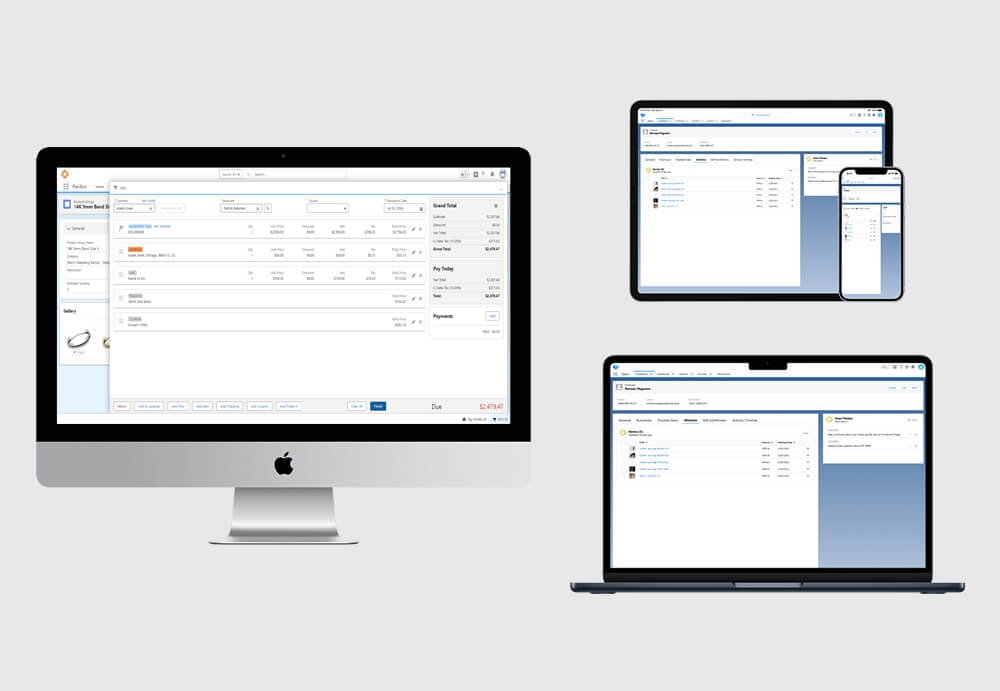
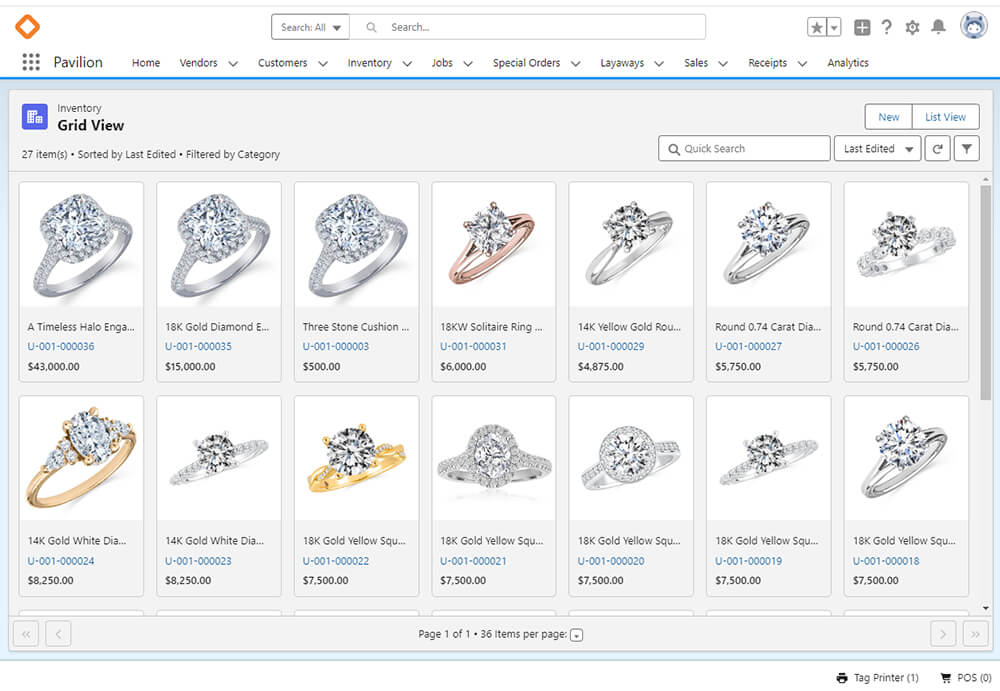
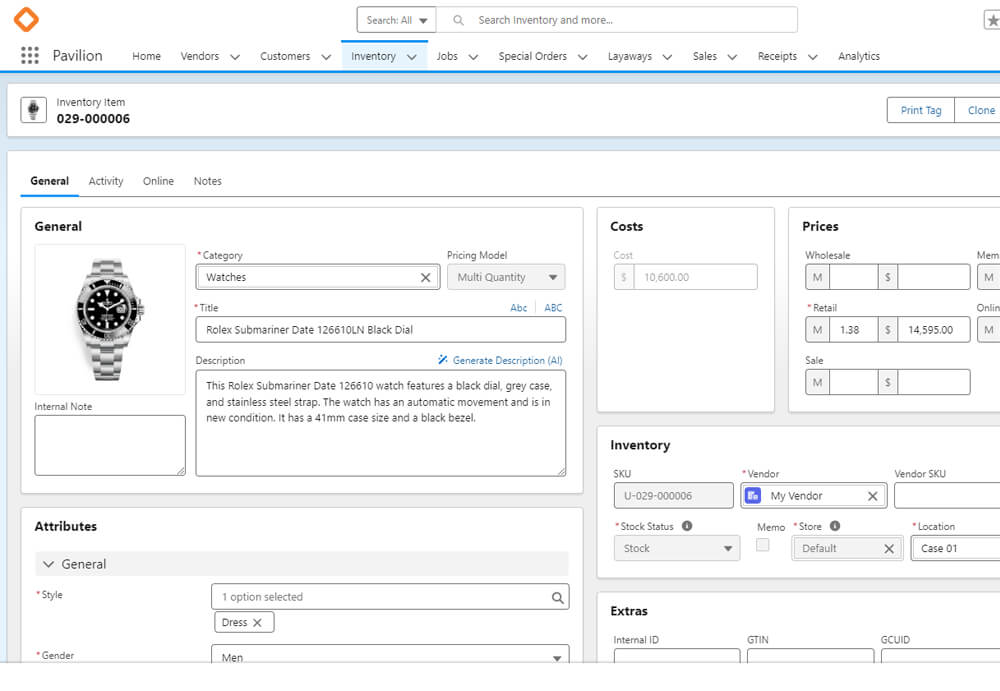



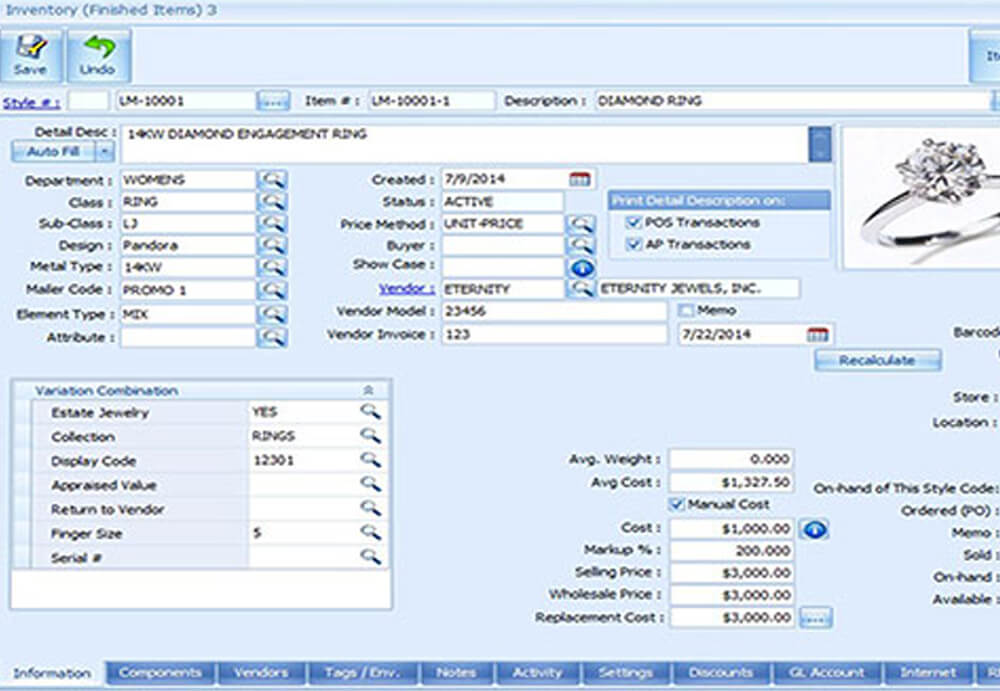






Pavilion is the modern interpretation of familiar POS systems jewelers have been using for decades. It simplifies common tasks while adding a lot of new and powerful features.
From an AI description writer powered by ChatGPT, to a diamond certificate auto-fill that seamlessly populates stone attributes directly from GIA.
The system allows you to manage your jewelry inventory, sales, custom jobs, repairs, and online catalogue from a single place. The team behind Pavilion comes from the jewelry industry and has a deep understanding of its specific needs.
Pavilion requires an internet connection as it’s designed to be fully online.
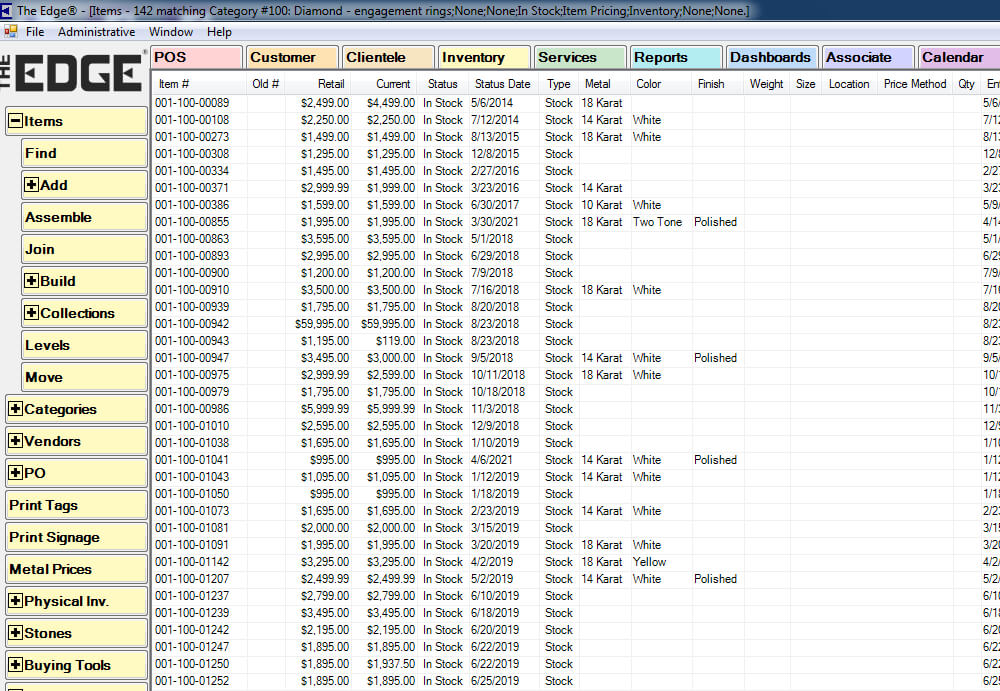
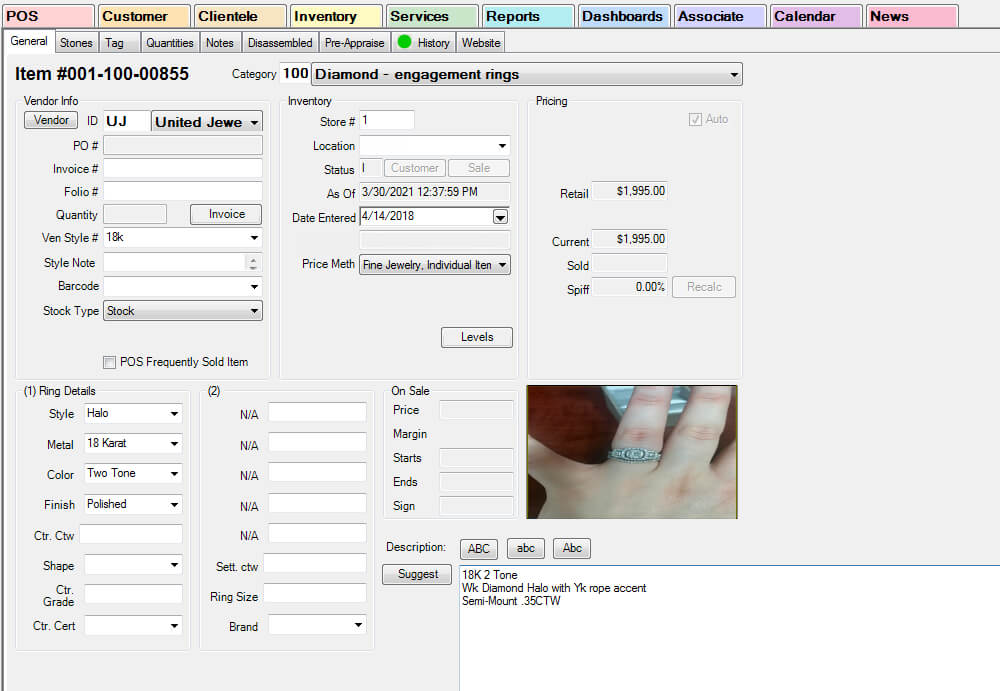
The Edge is well-established jewelry POS system that’s been around for a while. It’s a robust tool for jewelry stores, offering many complex features.
Setting up The Edge requires a significant initial investment and a server computer since it runs locally from your store, and you’ll need to set up a backup solution to ensure data safety.
Additionally, website integration is somewhat limited, relying on a one-way daily CSV file upload.
The software runs on Windows machines only and doesn’t support Macs.
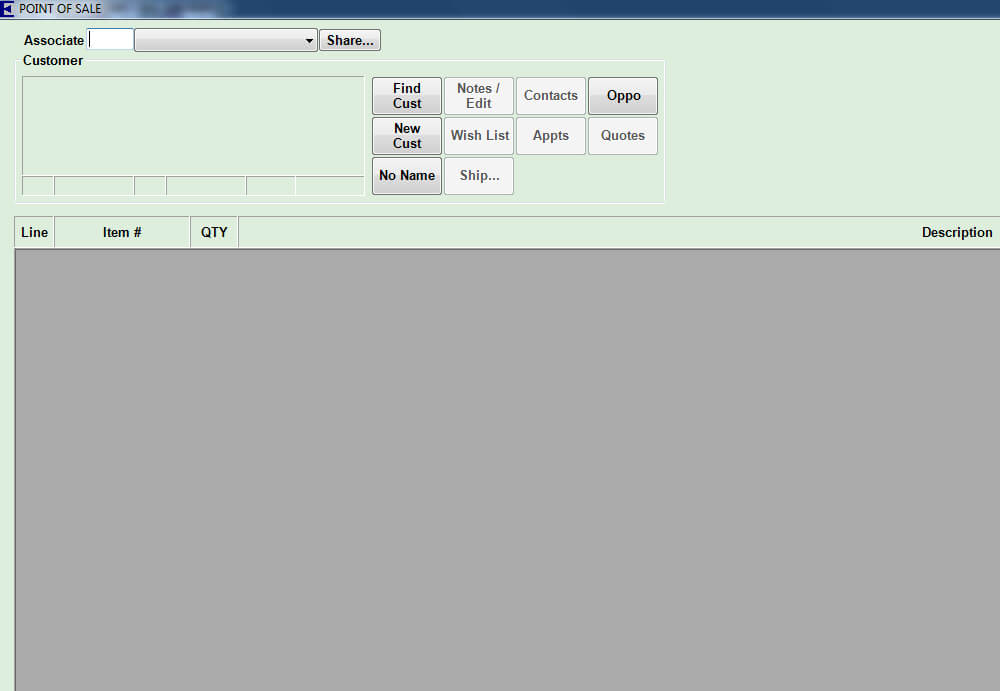
Like The Edge, JewelMate has been around for a while and you’ll need to invest in a server computer since it runs locally from your store. It also requires a significant initial investment and you’ll need to set up a backup solution to ensure data safety.
If you don’t use QuickBooks, JewelMate does have built-in accoutning tools which enable purchase order entry and the ability to distribute invoices into multiple GL accounts.
The software runs on Windows machines only and does not support Macs.
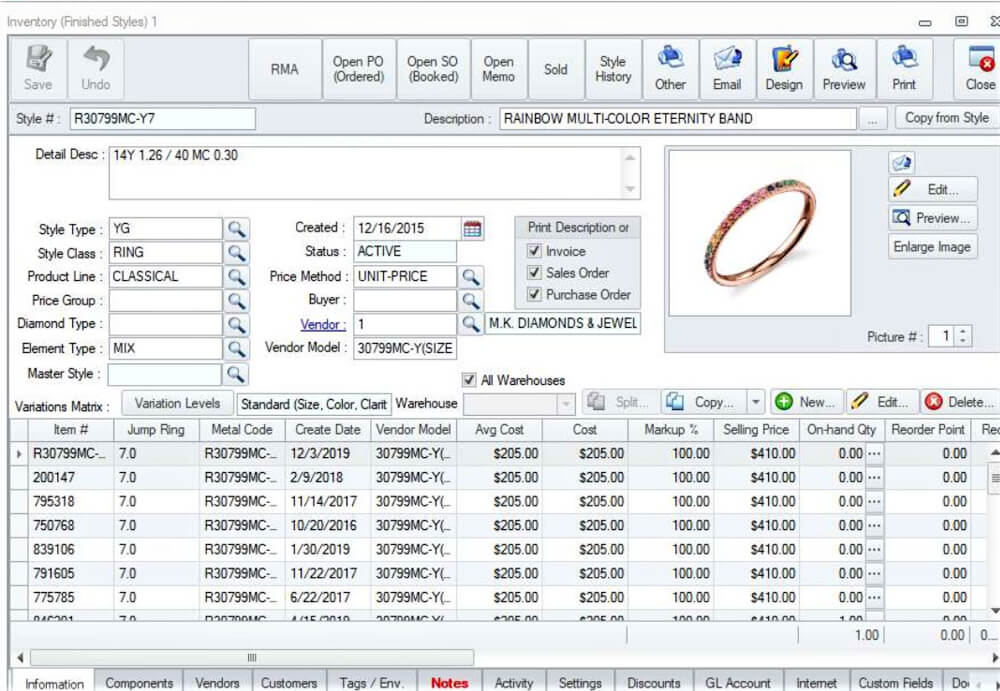
Jewel360 offers a jewelry POS system designed to streamline your business operations. While it comes with many integrated features, it’s important to be aware of a few shortcomings.
The platform includes a built-in credit card processing service, which means you’ll have to use their specified processor and forgo the rates and incentives you get from your current processor. Additionally, Jewel360 comes bundled with an e-commerce website, requiring you to transition from existing platforms like WooCommerce or Shopify, which could involve additional time and resources.
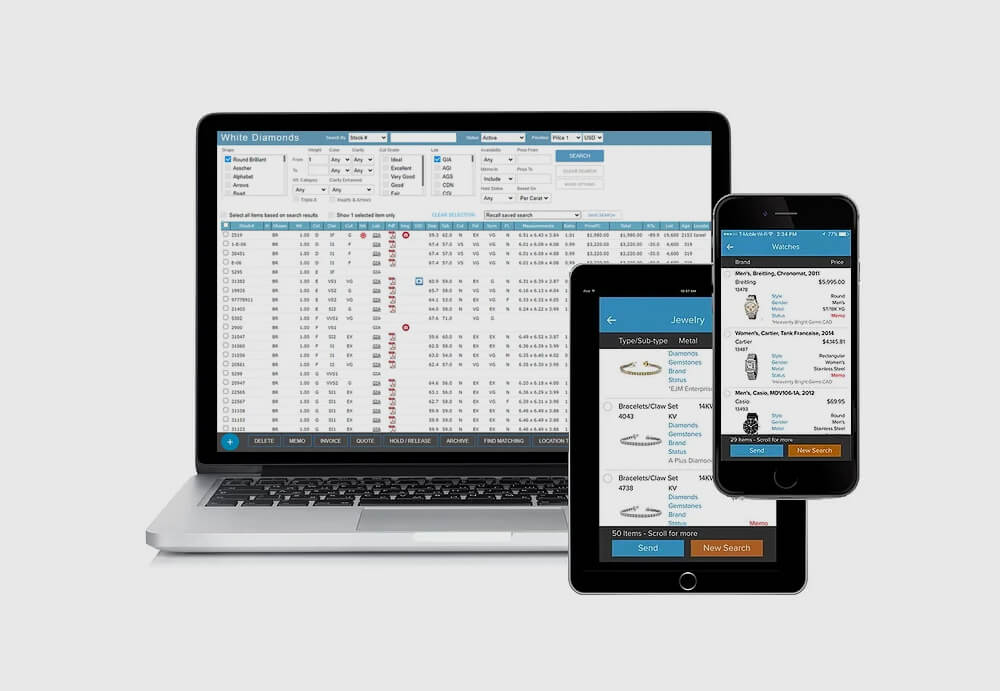
Diamond Track is a jewelry software solution tailored specifically for the diamond wholesale market, offering features designed to meet the needs of wholesalers.
Diamond Track lacks retail-specific features, and is more focused on inventory management for B2B needs. While it excels in managing wholesale operations, retail jewelers might find it doesn’t fully support their unique requirements, necessitating additional solutions or workarounds to bridge the gap.
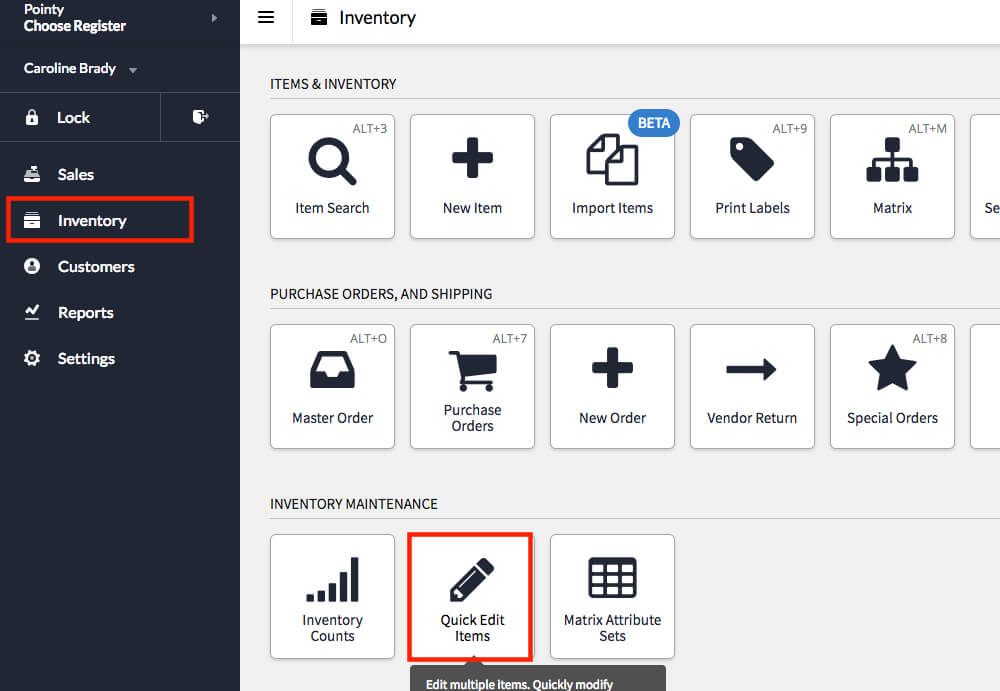
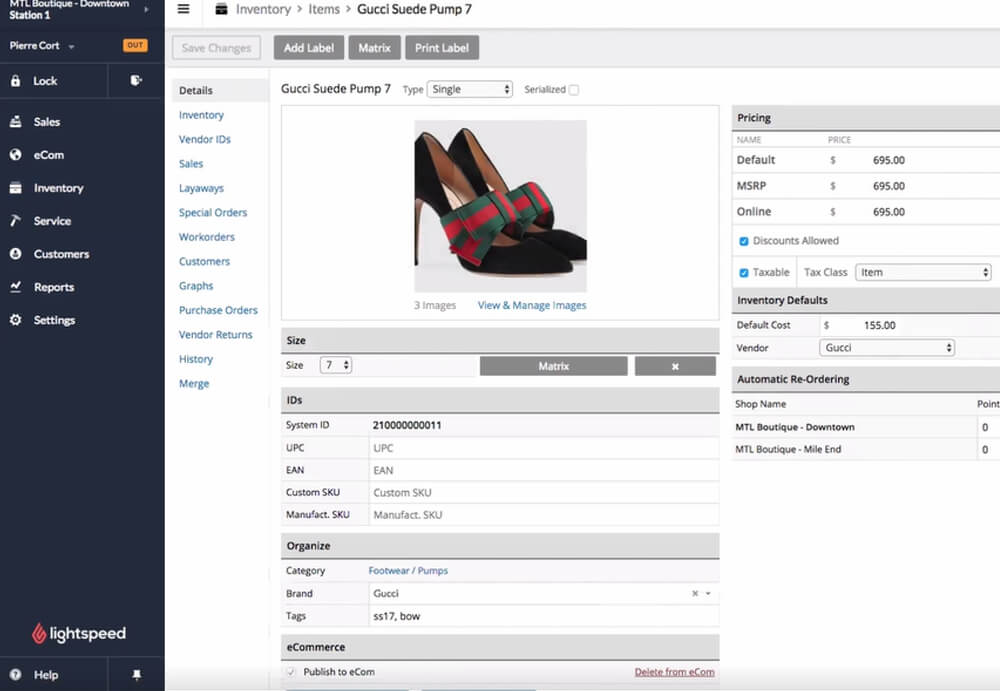
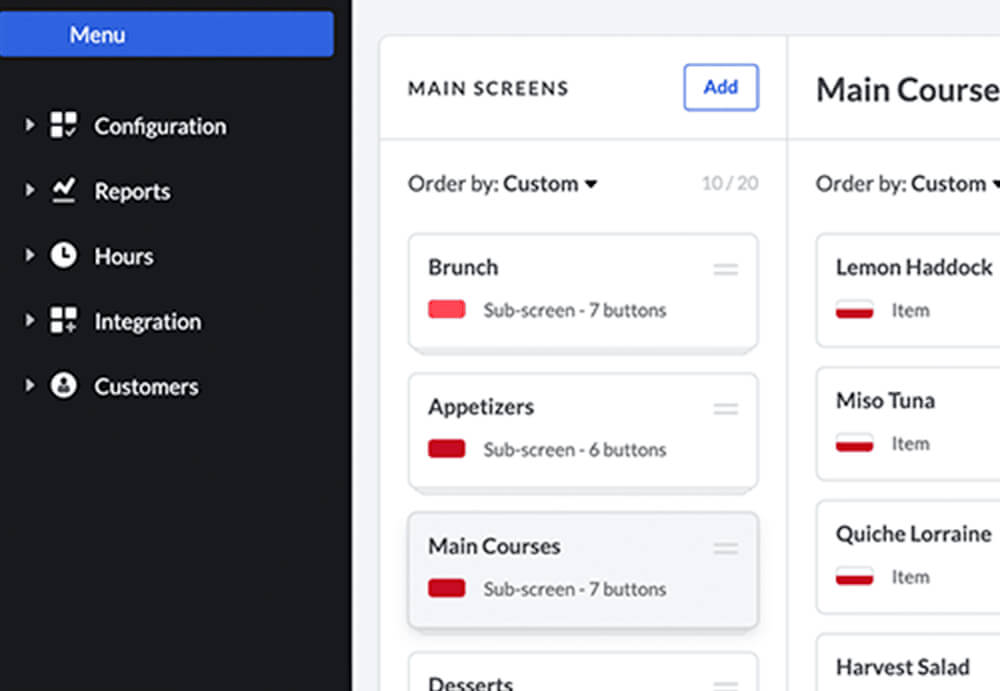
Lightspeed Retail caters to many business types and is not specialized to one specific industry.
It is a cloud-based platform that has many powerful features which can help stores run more efficiently. However, its lack of jewelry-specific features leaves more to be desired.
Retailers are also required to use Lightspeed’s credit card processing solution and abandon their current processor should they switch to the platform.
Gemsoft Treasure is a jewelry software boasting an easy-to-use graphical environment that runs on Windows environments.
While it offers a range of jewelry-specific features, the software is not up to spec with the needs of a modern jewelry store.
The best POS system for jewelry stores is one built specifically for the jewelry industry rather than generic retail. Jewelry businesses require advanced inventory tracking, repair management, custom order workflows, CRM tools, gemstone and diamond tracking, and multi-store capabilities that standard retail POS systems often cannot handle properly. At the top of our list is Pavilion POS & ERP, a modern cloud-based jewelry platform built on Salesforce with strong support for repairs, custom jobs, CRM, and multi-location operations. Another longtime industry favorite is The Edge for Jewelers, a more traditional legacy system that remains popular with many established jewelry stores. Both platforms serve different types of jewelers well depending on their workflow preferences, store size, and operational needs.
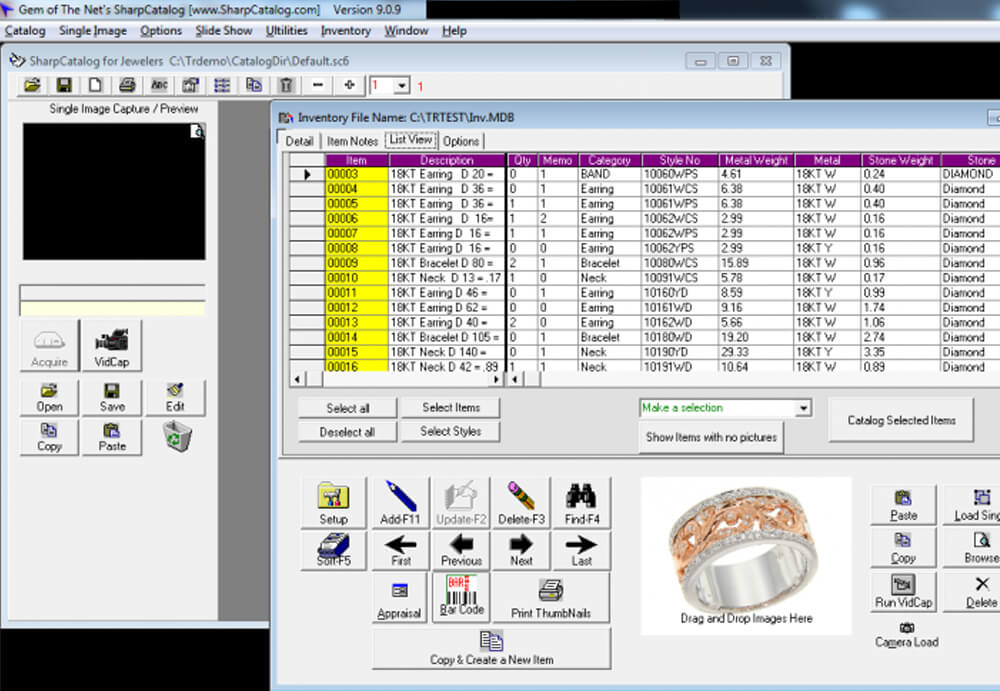
Many POS platforms are designed for general retail and later adapted for jewelry stores, but systems like Pavilion, The Edge for Jewelers, and JewelMate ,were developed specifically for the jewelry industry. These platforms include jewelry-focused features such as repair tracking, custom jobs, gemstone and diamond inventory management, appraisals, layaways, vendor memo handling, and precious metal pricing workflows that standard retail POS systems often lack.
Jewelry stores operate differently from most retail businesses. A standard POS may handle transactions, but it usually cannot manage jewelry-specific workflows such as repairs, custom design jobs, gemstone tracking, appraisals, layaways, vendor memo inventory, or precious metal pricing.
Cloud-based jewelry POS systems run through a web browser and allow stores to access inventory, sales, repairs, and customer information from anywhere with an internet connection. Server-based systems are installed locally within the store and typically require dedicated hardware, backups, maintenance, and manual updates. Many modern jewelry retailers prefer cloud-based platforms for their flexibility, remote access, automatic updates, and easier multi-store management, while some established stores still prefer traditional server-based systems for familiarity and local control.
For most modern jewelry stores, cloud-based POS systems offer significant advantages including remote access, automatic backups, easier multi-store management, and reduced IT maintenance.
The best jewelry POS systems typically include inventory management, repair tracking, custom order management, CRM and customer purchase history, barcode labeling, diamond and gemstone tracking, multi-location support, e-commerce integration, reporting and analytics, cloud access, SMS and email notifications, and vendor management.
Yes. Most modern jewelry POS systems include repair and custom job tracking. This allows stores to track an item from intake to completion, update statuses, attach photos, communicate with customers, and manage bench jeweler workflows.
Yes. The leading jewelry-specific POS systems include tools for managing layaways, appraisals, repair tickets, custom orders, and customer purchase history. These features are especially important for jewelry stores because transactions often involve high-value items, partial payments, long-term customer relationships, and detailed product documentation that general retail POS systems may not handle efficiently.
Yes. Jewelry-specific POS systems can track gemstone details such as carat weight, cut, clarity, color, certification numbers, shape, metal type, and stone dimensions.
Yes. Some modern jewelry POS systems can track watch serial numbers, diamond certificates, gemstone details, and other item-specific information tied to inventory records. This helps jewelry stores maintain accurate documentation, improve customer service, simplify appraisals and repairs, and better manage high-value inventory with unique identifying attributes.
Pricing varies widely depending on features and store size. Small jewelry POS systems typically range from $200-$500 per month, while enterprise systems may use custom pricing.
Many jewelry POS systems integrate with Shopify and WooCommerce to sync products, inventory, orders, and customer information between online and physical stores.
A jewelry POS mainly focuses on sales and retail operations. A jewelry ERP goes further by managing inventory purchasing, manufacturing, repairs, custom production, vendor management, accounting workflows, and advanced reporting across the business.
For most jewelry retailers, yes. A proper jewelry POS system can save significant time, reduce mistakes, improve customer experience, and help stores scale more efficiently compared to spreadsheets or generic retail software.
Jewelers should avoid choosing a POS system designed only for general retail without jewelry-specific functionality. Important features such as repair tracking, custom jobs, gemstone inventory management, appraisals, layaways, and detailed customer history can become difficult to manage without software built specifically for jewelry businesses. It is also important to evaluate long-term scalability, ease of use, reporting capabilities, and integration options before committing to a platform.
We take pride in providing reliable and comprehensive rankings of the best jewelry POS software. Our team comprises seasoned professionals from the jewelry industry, bringing years of experience and expertise to our evaluations. Here’s a closer look at our rigorous ranking process:
With a deep understanding of the unique needs and challenges faced by jewelry businesses, our team has a vast experience in both retail operations and software solutions. This industry knowledge allows us to assess POS systems with a keen eye on features that matter most to jewelers.
Each POS system mentioned on our site undergoes a thorough testing process. Our team immerses themselves in the software, running it through daily operations and scenarios commonly encountered in jewelry stores. This includes inventory management, sales transactions, customer relationship management, and more.
Beyond everyday use, we subject each POS system to rigorous testing to evaluate its performance under various conditions. We assess factors such as user-friendliness, reliability, scalability, and support services. Our goal is to provide an honest and detailed assessment that helps jewelry businesses make informed decisions.
While our rankings and reviews are based on extensive testing and professional judgment, they reflect our opinions only. The performance and suitability of any POS software may vary depending on individual business needs and circumstances. We recommend conducting your own research and trials before making a final decision. No warranties or formal representations of any kind are to be issued by the information contained on this site. Reliance on the information contained herein is solely on the consumer.
1. Introduction
BestJewelryPOS.com (“we,” “us,” “our”) is committed to protecting your privacy. This Privacy Policy outlines how we collect, use, and safeguard your information.
2. Information Collection
We do not collect any personal information. The only information we collect is through cookies and similar technologies to enhance your browsing experience and improve our website.
3. Use of Information
4. Sharing of Information
We do not sell, rent, or share your personal information as we do not collect any. Information collected through cookies is used solely for improving our website.
5. Data Security
We implement industry-standard security measures to protect any information collected through cookies. However, no method of transmission over the Internet is 100% secure.
6. Your Rights
You can manage your cookie preferences through your browser settings. You may also opt out of receiving cookies, but this may affect your experience on our website.
7. Changes to This Policy
We may update this Privacy Policy from time to time. Changes will be posted on this page with the revised effective date.
8. Contact Us
For any questions or concerns about this Privacy Policy, please contact us at [email protected].
By using BestJewelryPOS.com, you agree to this Privacy Policy.